
In this video I discuss voodoo and Babylonian origins of Virgin Mary worship in Catholicism with special emphasis on the Black Madonna worship.
Showing posts with label Sri Lanka's Killing. Show all posts
Showing posts with label Sri Lanka's Killing. Show all posts

SRI LANKA: LA BÚSQUEDA POR LA JUSTICIA SRI LANKA: THE SEARCH FOR JUSTICE (SPANISH VERSION)

SRI LANKA
La búsqueda por la Justicia
Vídeo Guía Una informativo sobre la problematica si el debate en la reunión del Consejo de Derechos Humanos de las Naciones Unidas Septiembre 2015.
-----------------------------
En Septiembre el Consejo de las Naciones Unidas de Derechos Humanos evaluará el product de la Investigación pospuesta si Adelanta Sri Lanka Sobre los Crímenes de Guerra cometidos POR Las Dos contradictorios involucradas.
El Consejo NECESITA Decidir Cuales seran los Pasos Tomar párrafo tiene Garantizar la justicia y Evitar la Impunidad en Sri Lanka.
Este Cortometraje describir organismos europeos de normalización Crímenes -resaltando Aquellos Factores que Deben Ser considerados Asegurar párr La Verdad y Justicia para TODAS LAS las Comunidades en el País ESE.
Es Una Revisión Esencial Para Todos Aquellos involucrados en Estas Discusiones.
Equipo No Zona de Fuego. Septiembre, 2015.
-------------------------
"Los Ciudadanos no pueden recibir simplemente soluciones en Escenarios Donde Ellos no were considerados ... Las Consultas con Aquellos Cuyos DERECHOS were violentados're escencial"
Comentario por el Sr. Pablo de Greiff, especial en el Reportero promoción de la Verdad, la Justicia y la Reparación Garantías hay ante las Naciones Unidas recurrencia. Sri Lanka, Abril 2015.
#LetThemBeHeard click here https://vimeo.com/137683777
La búsqueda por la Justicia
Vídeo Guía Una informativo sobre la problematica si el debate en la reunión del Consejo de Derechos Humanos de las Naciones Unidas Septiembre 2015.
-----------------------------
En Septiembre el Consejo de las Naciones Unidas de Derechos Humanos evaluará el product de la Investigación pospuesta si Adelanta Sri Lanka Sobre los Crímenes de Guerra cometidos POR Las Dos contradictorios involucradas.
El Consejo NECESITA Decidir Cuales seran los Pasos Tomar párrafo tiene Garantizar la justicia y Evitar la Impunidad en Sri Lanka.
Este Cortometraje describir organismos europeos de normalización Crímenes -resaltando Aquellos Factores que Deben Ser considerados Asegurar párr La Verdad y Justicia para TODAS LAS las Comunidades en el País ESE.
Es Una Revisión Esencial Para Todos Aquellos involucrados en Estas Discusiones.
Equipo No Zona de Fuego. Septiembre, 2015.
-------------------------
"Los Ciudadanos no pueden recibir simplemente soluciones en Escenarios Donde Ellos no were considerados ... Las Consultas con Aquellos Cuyos DERECHOS were violentados're escencial"
Comentario por el Sr. Pablo de Greiff, especial en el Reportero promoción de la Verdad, la Justicia y la Reparación Garantías hay ante las Naciones Unidas recurrencia. Sri Lanka, Abril 2015.
#LetThemBeHeard click here https://vimeo.com/137683777
Sri Lanka: The Search for Justice (English)
Sri Lanka: The Search for Justice (English)
THE SEARCH FOR JUSTICE
A Powerful video guide to the exits - designed to inform debate at the September 2015 meeting of the Human Rights Council.
...............................
In September the United Nations Human Rights Council Will Consider the publication of the investigation into war crimes by Both Sides in the Sri Lankan war qui ended in May 2009.
The Council needs to Consider what steps shoulds be taken to Ensure Justice and Impunity end in Sri Lanka.
This short video Describes Those crimes - and sets out the issues qui must be regarded in finding a way to truth and justice Ensure for all the Communities of Sri Lanka.
It is essential viewing for anyone with Concerned thesis discussions.
The No Fire Zone Team. September 2015
...........................
"Citizens can not simply be presented with 'solutions' in the design of qui They Were Given no role ...... Consultation with Those affected by the violations is essential"
Remarks by Mr. Pablo de Greiff, UN Special Rapporteur on the Promotion of Truth, Justice, Reparation and Guarantees of Non-Recurrence, after-His visit to Sri Lanka in April 2015
#LetThemBeHeard
CLICK HERE https://vimeo.com/137574446


US Court grants permission to serve summons on Rajapakse via Tamilnet

"After service is effectuated, President Rajapaksa will be compelled to respond to the Complaint’s accusations in a court of law uncompromised by partisan politics. It can be expected that President Rajapaksa will retain an army of luxury-priced lawyers to defend him, who will attempt to throw technical legal obstacles to thwart justice.
"We urgently need all available financial and moral support to achieve victory not only for the three named Plaintiffs, but for all the victims of President Rajapaksa’s atrocities. A judgment in our favor in this case would set a precedent that would underwrite copy-cat TVPA suits by other victims of Rajapaksa endorsed or sponsored extra-judicial killings or torture.”

how international silence enabled Sri Lanka’s genocide

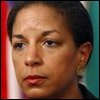
In March 2009 Sri Lanka had come to the attention of the UN’s Special Adviser for the Prevention of Genocide, Francis Deng, but despite his disquiet he did not take further steps as Sri Lanka had assured him the United States and India supported its military campaign, according to a leaked US cable. The account of the meeting on March 16, 2009 between Mr. Deng and the US Ambassador to the UN, Susan Rice, as well as other US cables, shows how international inaction and silence, rather than ignorance, made it possible for Sri Lanka to continue and escalate its mass killings of Tamil civilians.
U.S. Ambassador to the U.N. Susan Rice

Francis Deng, Special Adviser for the Prevention of Genocide

Robert O'Blake, Former Ambassador to Sri Lanka
The discussion on Sri Lanka is summarised thus:
“Deng spoke of conversations that he had with that [Sri Lanka’s] permanent representative to the United Nations. The Sri Lankan perm rep told Deng that his country's actions in mounting an offensive against the Liberation Tigers of Tamil Elan (LTTE) in the north of Sri Lanka were known to its friends the United States and India.
“The Sri Lankan representative left the impression that his government's measures against the LTTE are supported by the US and India.
“A visit to Sri Lanka left Deng impressed with the great cleavages between the Sinhalese and Tamils that would not be solved by the government's victory on the battlefield.”
US knowledge and silence
There is no indication in the cable that Ambassador Rice had either contradicted Sri Lanka’s assertion, or raised the issue of mass casualties amongst civilians being inflicted by the ongoing attacks and humanitarian blockade by the Colombo government – though these were discussed in relation to Sudan.
This is despite, just two days before the Deng-Rice meeting, US Secretary of State Hillary Clinton having called Sri Lankan President Mahinda Rajapaksa over the mass killings of civilians by government forces.
For at least two months earlier, international rights organisations like Human Rights Watch were highlighting the shelling of hospitals and other civilian targets.

Invisible massacre in Sri Lanka (Courtesy: Chappatte cartoon)
Ambassador Blake told Mr. Bogollogama Sri Lanka’s denials of civilians being shelled by government forces “was simply not credible, given multiple, credible, independent sources on the ground in the safe zone.”
Calling Sri Lanka’s blocking of medical supplies into the Tamil areas “unconscionable”, Mr. Blake warned Mr. Bogollogama that if government forces took the safe zone by force thousands, perhaps tens of thousands, could be killed and that if such casualties occurred, the government would be accused of war crimes.
‘Push back’ on genocide
None of these US concerns were however expressed in public, enabling Sri Lanka to continue its murderous onslaught against the Tamil population untrammelled by any international pressure.
The only voices protesting vehemently against Sri Lanka’s mass killings were some international human rights organisations and the Tamil Diaspora, who staged mass demonstrations in western capitals. And they were largely ignored.
Another US cable sent on March 4, for example, notes that embassy staff were receiving a daily “flood of emails” from concerned Diaspora Tamils calling for a ceasefire and focusing on conditions of civilians in the safe zone and internment camps.
In response, the cable says, US officials were “pushing back” against allegations of genocide, “calling it an overstatement.”
Yet barely a month later, on April 18, 2009 , Ambassador Blake - again privately - told Sri Lankan officials that “comparisons are already being made to what transpired in Rwanda” and international action on Sri Lanka’s actions.
Separately, also in early April, senior UN officials told representatives of Tamil groups including the US-based TAG (Tamils Against Genocide), that there was a “divided opinion” within the UN as to whether what was unfolding in Vanni was genocide or not.
But in public the UN not only maintained a total silence on the mass killings, but even sought to play down the numbers of civilian casualties.
Little wonder, then, that Sri Lanka could confidently assert to the international community, as it had to Mr. Deng, that the US and India were supportive of its military offensive.
In April 2011, the report by a panel of experts appointed by UN Secretary General Ban Ki-Moon not only said it found credible that 40,000 civilians had been killed in five bloody months, adding that “most civilian casualties in the final phase of the war were caused by government shelling”
Amongst their recommendations was that the UN’s own actions in the period be looked at. Last week Mr. Ban appointed former UN Population Fund chief Thoraya Obaid to conduct a review.
Citing judgments of the International Criminal Tribunal for the former Yugoslavia and other precedents, TAG argues that the UN panel of experts’ 2011 report supports the case for genocide in Sri Lanka.
Contrast to Sudan
The account of the Deng-Rice meeting puts in further focus the case of Sri Lanka.
The cable describes at some length their discussion on the situation in Sudan – Mr. Deng’s home country.
Ambassador Rice challenged Deng on the dismal response of African leaders to the crisis in Sudan, described many African leaders as “being more interested in their narrow self-interests rather than the good of the people of Sudan.”
She also criticised the SPLM (Sudan People’s Liberation Movement) for “not play[ing] a constructive role in seeking security and justice for the people of Darfur”, and for “remain[ing] conspicuously silent when the government of Sudan announced the expulsion of international humanitarian NGOs from the country.”
Ambassador Rice also noted that she had gone on record as labeling the Sudanese expulsion of humanitarian agencies and the resulting closure of aid programs as “genocide by other means.”
However, just a few months earlier (September 2008), the Sri Lankan government had also expelled humanitarian agencies from the Vanni.
In response there was no protest, let alone action, from the US or any other international actor.
Instead, in an accompanying blaze of publicity, the humanitarian community drove out of the Vanni in a single convoy, abandoning hundreds of thousands of people to their fate.
Interestingly, this is what the cable quotes Mr. Deng as saying regarding Sudan’s humanitarian blockade:
“he had drafted a mild statement in response to the Sudanese government's action to expel aid agencies, but that it was stuck in the office of the Secretary General where a quiet, low-key approach is favored when dealing with this matter.”
Mr. Deng had opened the meeting by stating that his mandate as the Special Adviser for the Prevention of Genocide (SAPG) “is impossible, but must be made possible”.
He saw the work of his office as the catalyst for a larger process within the UN to prevent genocide from occurring, but admitted that “at the moment, he does not push to be allowed to brief the UN Security Council unless he knows that he will get a positive response.”
He also noted how NGOs were pushing his office “to adopt a strategy of ‘name and shame’” in the prevention of genocide.
Responding to Amnesty International on their recently released report critiquing the LLRC
 The Sri Lanka delegation in Geneva strongly refuted the assertion by Amnesty International that the LLRC was not mandated for accountability. The Sri Lanka delegation in Geneva strongly refuted the assertion by Amnesty International that the LLRC was not mandated for accountability. |
Responding to Amnesty International on their recently released report critiquing the LLRC, the former Attorney General and Senior Advisor to the Cabinet of Ministers Mohan Pieris noted that any critique and "pre-judgement of the process before its completion is superfluous and unacceptable". He elaborated on the "broad mandate" accorded to the LLRC, structured on the concept of restorative justice. The former AG made these observations at a side event titled "Sri Lanka - Humanitarian Operation: A Factual Analysis", organized on the margins of the HRC in Geneva by the Permanent Mission of Sri Lanka to the United Nations in Geneva on September 12. Briefing the attendees on the termination of emergency regulations promulgated under the Public Security Ordinance in 2005, Mohan Pieris noted that the said regulations were implemented in the past to deal with an extraordinary situation related to the need to protect the country and its people from terrorist forces. He further observed that the emergency regulations have presently been terminated in their entirety given the incremental process of normalisation in the country. He said that as early as May 2010, the Sri Lanka Government reduced the scope of the Emergency Regulations in keeping with improvements in the ground situation. Several developing countries endorsed the above position. They noted that Sri Lanka's domestic reconciliation process should be supported by the international community and no action including pre-judgement of the process, should be undertaken by any party or parties prior to completion of the LLRC's mandate. They also commended Sri Lanka for the humanitarian operation conducted to protect civilians from terrorism, and remarked upon the significant progress in resettlement and rehabilitation achieved in the aftermath of the conflict. Government Agent /Jaffna Ms. Imelda Sukumar in responding to queries on the situation in Jaffna elaborated on the resettlement of people including in the former High Security Zones, progress with regard to demining and restoration of livelihoods of the people including in the fisheries sector. She also referred to the rapid return to normalcy of the Jaffna district. Speaking at the occasion Minister Mahinda Samarasinghe said: "Sri Lanka should be given the time and space required to complete the LLRC process, and the international community must take due cognizance of significant progress achieved by Sri Lanka in rehabilitation and resettlement of IDPs, economic development of the North and the East, demining activities and in the reconciliation process". observed Hon. Mahinda Samarasinghe, Minister of Plantation Industries and Special Envoy of the President on Human Rights, who led the Sri Lanka delegation to The Sri Lanka delegation at the side event provided a succinct analysis of the post-conflict developments in the country, and briefed participants on progress in the legislative front such as the termination of emergency regulations and the adoption of the National Action Plan for Human Rights by the Cabinet of Ministers. The film "Lies Agreed Upon" refuting the allegations leveled against the Sri Lanka Government in the Channel 4 film entitled "Sri Lanka's Killing Fields" and highlighting its inaccuracies and inconsistencies was also shown. The President of the Maldives H.E. Mohamed Nasheed speaking at the event urged the support of the international community for the reconciliation process in Sri Lanka. He noted that all Sri Lankans were affected by the conflict, and strongly welcomed the efforts made by the Sri Lanka Government towards speedy resettlement and rehabilitation of communities and towards development of the conflict-effected areas following the onset of peace. Following the broadcast of the "Lies Agreed Upon" video, participants acknowledged that events can be presented in different ways and may not necessarily be true. A cross section of member countries of the Human Rights Council, INGOs and civil society organizations participated in the side event. They appreciated the opportunity provided for a very frank exchange of views on developments in Sri Lanka, and expressed the hope that further briefings may be provided via similar events organized on the sidelines of the forthcoming sessions of the HRC. The participants were given copies of information material on Sri Lanka including copies of the "Lies Agreed Upon" DVD, the publications entitled "Humanitarian Operation Factual Analysis July 2006 - May 2009" and "Sri Lanka: The Emerging Wonder of Asia" published by the Ministries of Defence and Economic Development respectively, as well as material produced by the Ministry of External Affairs, at the Forum. They were also directed to the relevant websites with regard to information available in the public domain on the LLRC process, and other legislative enactments. The other members of the Sri Lanka delegation comprised Minister of Irrigation & Water Resources Management, Nimal Siripala de Silva, Minister of Environment, Anura Priyadarshana Yapa, MP Sajin de Vass Gunawardena, Sri Lanka's Permanent Representative /Ambassador to the UN Tamara Kunanayakam, Senior Advisor to the Cabinet of Ministers Mohan Pieris, Secretary/Presidential Task Force for Resettlement, Development and Security for the Northern Province Mr. S.B. Divaratna, Government Agent/Jaffna Ms. Imelda Sukumar, and Addl. Government Analyst W.D.G.D. Gunatilleke. |
Sri Lanka dismisses reports of recalling Jagath Dias
Sri Lanka's External Affairs Ministry has dismissed a Swiss news Agency report that said the Deputy Ambassador to Germany, Switzerland and Vatican, former Major General Jagath Dias has been recalled due to alleged war crimes charges.
The Ministry has said the diplomat will return to the country at the end of this month when his two-year term lapses.
The Ministry has explained that former military personnel are stationed at diplomatic posts strictly for a two-year term and they are required to return to the country unless the President renews the term.
The Swiss News agency reported that diplomatic sources had confirmed that Major General Dias had been recalled to Sri Lanka. However the diplomatic missions in Berlin and Geneva had not confirmed the report.
The Ministry has said the diplomat will return to the country at the end of this month when his two-year term lapses.
The Ministry has explained that former military personnel are stationed at diplomatic posts strictly for a two-year term and they are required to return to the country unless the President renews the term.
The Swiss News agency reported that diplomatic sources had confirmed that Major General Dias had been recalled to Sri Lanka. However the diplomatic missions in Berlin and Geneva had not confirmed the report.

West’s criticism of Lankan human rights record concerned India
 In what might prove to be a political embarrassment for Congress in Tamil Nadu, a Wikileaks cable has revealed that India viewed Western criticism of Sri Lanka’s human rights record with concern as it felt shunning the island nation would drive it towards China.
 An Indian official in the external affairs ministry told US diplomats that the West - by shunning a victorious Sri Lanka (after its defeat of the LTTE) over human rights issues - “pushed Sri Lanka into China’s arms”, and opened the region to the influence of both China and Iran.
In the January, 2010, interaction, joint secretary T S Tirumurthi said the elections in Sri Lanka should be welcomed and they would mark a new phase in resolving the Tamil question democratically. India was confident that if the vote is closely divided it would motivate the victor to consider the views of the other camp.
“The pattern of Chinese assistance to the needy northern areas of Sri Lanka would not uphold democratic ideals and human rights. Indian security, defence, and ethnicity-related interests are directly affected by Sri Lankan actions. In this regard, India welcomed U S engagement and saw the U S abstention on the IMF vote as a signal of a pragmatic approach,” the cable says of the Indian position.
While Indian did not perceive the Chinese role as ill-intentioned, nor wish to counter it, Tirumurthi highlighted that India last December extended a $425 million line of credit to Sri Lanka that had however got no attention.
A Sri Lankan first secretary in the embassy at New Delhi told US diplomats that “that some of the rail projects were funded in part by the Chinese, so it would be “very embarrassing” if the Indians did not complete their section.”
The cable also stated that Tirumurthi’s comment that India was not trying to counter Chinese influence in Sri Lanka should be taken with a grain of salt. “Our contact at the Sri Lankan High Commission hit the bull’s eye with his comment that India might be embarrassed if they could not match Chinese contributions to reconstruction.”
srilanka army made terror unleashed in Jaffna after public unmasks ‘grease devils’
Occupying Sri Lanka Army entered into houses at Naavaan-thu’rai in Jaffna city Monday night, dragged out hundreds of youth and children and tortured them in their camps during the night, following public in Naavanthu’rai on Monday identifying the ‘grease devils’ as SLA soldiers. Many houses were destroyed and plundered by the SL soldiers. On Monday when five ‘grease devils’ entered into a house at Naavaanthu’rai and when the public chased them, the intruders escaped by entering into a nearby SL Army camp. Identifying the intruders as SLA soldiers, the public waged a protest in front of the camp demanding the arrest of the intruders by SL police. The angry public pelted stones at the camp. The SL Army in a planned revenge terrorised the residents during the night.


 On Tuesday morning the SL police produced the youths taken away by the SL Army in the courts with complaints that they were behaving unruly.
The youths were found with injuries caused by SLA assault and torture.
About 25 of them were admitted in hospitals after a court order. Many more need medical treatment, the victims said.
The assault and torture took place both at the SL Army camp and at the SL police station, the youth victims further said.
Besides causing damages to houses, the SL Army plundered money and valuables worthy of several lakhs, the residents said.
Streets and buildings were found abandoned in Naavaanthu’rai on Tuesday.
Naavaanthu’rai, located about 3 km from the heart of Jaffna city is a fishing suburb.
The attitude behind the incident only reiterates why Sinhalese and Tamils cannot make a single country, responded a Catholic priest of the area.
A similar incident was also reported from Mallaakam in Valikaamam part of the Jaffna peninsula on Monday.
The ‘grease devil’ is a terror formula that grips Tamils and Muslims in the north and east of the island.
Assailants applying grease on their face attack especially the women, sometimes grievously.
The attacks have caused much tension not only in all the districts of the north and east, but also in the up-country and in Puththa’lam where Tamils and Muslims live in concentration.
After such attacks the SL Army is brought into the areas to establish camps in the guise of providing ‘security’.
The public has long been suspecting that the occupying SL forces for the attacks as in many of the incidents the attackers used to escape by getting into the camps of the occupying forces.
On Monday at Naavanthu’rai in Jaffna the culprits responsible for such attacks were clearly identified as occupying SLA soldiers.
In another incident at Vathiri in Vadamaraadchi, Jaffna, a ‘grease devil’ caught by the public on Monday night was found to be a Sinhala soldier of the intelligence unit.
The ultimate anger of the public turns towards India, USA and China that continue to ‘grease’ the genocidal military machinery in the island.


The youths were found with injuries caused by SLA assault and torture.
About 25 of them were admitted in hospitals after a court order. Many more need medical treatment, the victims said.
The assault and torture took place both at the SL Army camp and at the SL police station, the youth victims further said.
Besides causing damages to houses, the SL Army plundered money and valuables worthy of several lakhs, the residents said.
Streets and buildings were found abandoned in Naavaanthu’rai on Tuesday.
Naavaanthu’rai, located about 3 km from the heart of Jaffna city is a fishing suburb.
The attitude behind the incident only reiterates why Sinhalese and Tamils cannot make a single country, responded a Catholic priest of the area.
A similar incident was also reported from Mallaakam in Valikaamam part of the Jaffna peninsula on Monday.
The ‘grease devil’ is a terror formula that grips Tamils and Muslims in the north and east of the island.
Assailants applying grease on their face attack especially the women, sometimes grievously.
The attacks have caused much tension not only in all the districts of the north and east, but also in the up-country and in Puththa’lam where Tamils and Muslims live in concentration.
After such attacks the SL Army is brought into the areas to establish camps in the guise of providing ‘security’.
The public has long been suspecting that the occupying SL forces for the attacks as in many of the incidents the attackers used to escape by getting into the camps of the occupying forces.
On Monday at Naavanthu’rai in Jaffna the culprits responsible for such attacks were clearly identified as occupying SLA soldiers.
In another incident at Vathiri in Vadamaraadchi, Jaffna, a ‘grease devil’ caught by the public on Monday night was found to be a Sinhala soldier of the intelligence unit.
The ultimate anger of the public turns towards India, USA and China that continue to ‘grease’ the genocidal military machinery in the island.
Sri Lanka’s Killing Fields screened in New Zealand parliament

BBC Channel 4’s documentary Sri Lanka: The Killing Fields was screened in the New Zealand parliament Tuesday for members of the parliament and staff of the political parties. Green Party MP Keith Locke, Labour Party MP Maryan Street and National Party MP Jackie Blue were co-sponsors of the show. The Sri Lanka High Commission and some supporters in the Sri Lankan community in New Zealand tried to stop the screening without success.
MPs and staff from four parties attended the show. They included Mana Party leader Hone Harawira and Green Party co-leader Russel Norman.
Green MP Keith Locke said the audience left the screening silent and stunned by the horrific scenes in the film.
There was a feeling among those present that something to be done to bring those responsible to account, news sources in New Zealand said.


